
🎶 Alessandro Stradella Baroque Festival: Tuscia Resounding with the Ancient and the Future
- Giano di Vico

- Sep 1, 2025
- 3 min read
Updated: Dec 25, 2025

There is a moment, when the notes rise among the stones of the villages and echo beneath the vaults of ancient churches, when Tuscia seems to return to the seventeenth century. It is then that the Alessandro Stradella Baroque Festivalcomes to life: a weave of music, research, and storytelling that each year transforms Viterbo, Nepi, and their surroundings into a widespread stage.
👤 Alessandro Stradella, the restless genius
Born in Nepi in 1639, Stradella was one of the freest and most visionary spirits of the Italian Baroque. A precursor of the concerto grosso and the da capo aria, he fascinated courts and theaters with vibrant music—both refined and popular. His life was short and adventurous, marked by passions and duels, until his violent death in Genoa in 1682. Today, thanks to the festival that bears his name, his artistic legacy once again speaks to the contemporary public.
📍 A festival spread across villages and villas
The festival is not just a concert program: it is a journey through places and atmospheres. The music of Stradella and his contemporaries resounds:
in the Romanesque churches of Viterbo,
in the elegant halls of the Palazzo Farnese in Caprarola,
in the Renaissance courtyards of Nepi,
among the geometric gardens of Villa Lante in Bagnaia,
and in smaller towns such as Tuscania, Ronciglione, Civitella d’Agliano.
Each venue becomes a piece of a Baroque mosaic that unites history, architecture, and landscape.
🎼 Program and atmospheres
The Stradella Festival alternates sacred oratorios, staged operas, instrumental concerts, and contaminations with dance and theater. Thematic paths abound:
“Santa Rosa di Viterbo” by Alessandro Melani, solemn inauguration in 2023.
“An Angel of Paradise – The Orrigoni Songbook” (2025), a tribute to the famous castrato Marc’Antonio Orrigoni.
Projects on lesser-known repertoires, such as Roman Baroque for cello, popular traditions, or the rediscovery of forgotten scores.
Each edition is a unique experience: between lit candles, reverberations of ancient strings, and voices that seem to open portals in time.
🎓 Stradella Project & Y-Project
Not just concerts, but research and training.
The Stradella Project, created by artistic director Andrea De Carlo, explores the performance practices of the seventeenth century, with particular attention to vocality and phonetics.
The Stradella Y-Project involves young international musicians in artistic residencies, staging little-known operas and oratorios. A generational bridge that renews the Baroque tradition.
🎉 Community and hospitality
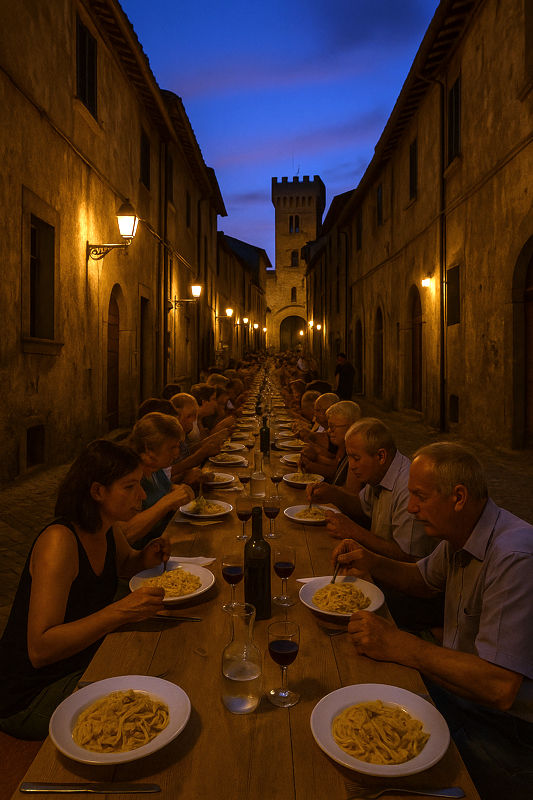
The festival is also an opportunity to experience Tuscia in a new light. After the concerts, the audience spills into squares, taverns, and the narrow streets of the historic centers. It is music that does not remain closed in a hall, but becomes encounter, dialogue, and celebration.
🌟 Why come
The Alessandro Stradella Baroque Festival is not just for specialists: it is an invitation to discover total beauty—music, places, people. It is the chance to listen to a Baroque aria while outside the air smells of peperino stone and new wine, to realize how a note written four centuries ago can still move today’s listener.
✨ In Viterbo and its villages, Baroque is not a chapter of history: it is a living language that every September returns to be heard. And those who take part are not only spectators, but part of a story that unites past and future.

Comments