
🏝️ The Islands of Lake Bolsena: History, Mystery, and Legends
- Giano di Vico

- Aug 4, 2025
- 3 min read

In the heart of Tuscia, two gems rise from the volcanic waters of Lake Bolsena: Isola Bisentina and Isola Martana. These islands are steeped in over two thousand years of history, mystery, and spiritual legacy.
🌳
Isola Bisentina
– The Majestic and Mysterious Jewel
🏛️ History and Ownership
📜 Inhabited since Etruscan and Roman times; archaeological finds include a pirogue (1989).
🔒 In 1261, Pope Urban IV renamed it Isola Urbana and used it as a prison for the Templars.
👑 Later owned by the Farnese family, becoming part of the Duchy of Castro.
🌸 Passed through noble families: Piatti, Spada Potenziani, Del Drago.
🏛️ Since 2017, owned by the Rovati family (founders of Rottapharm).
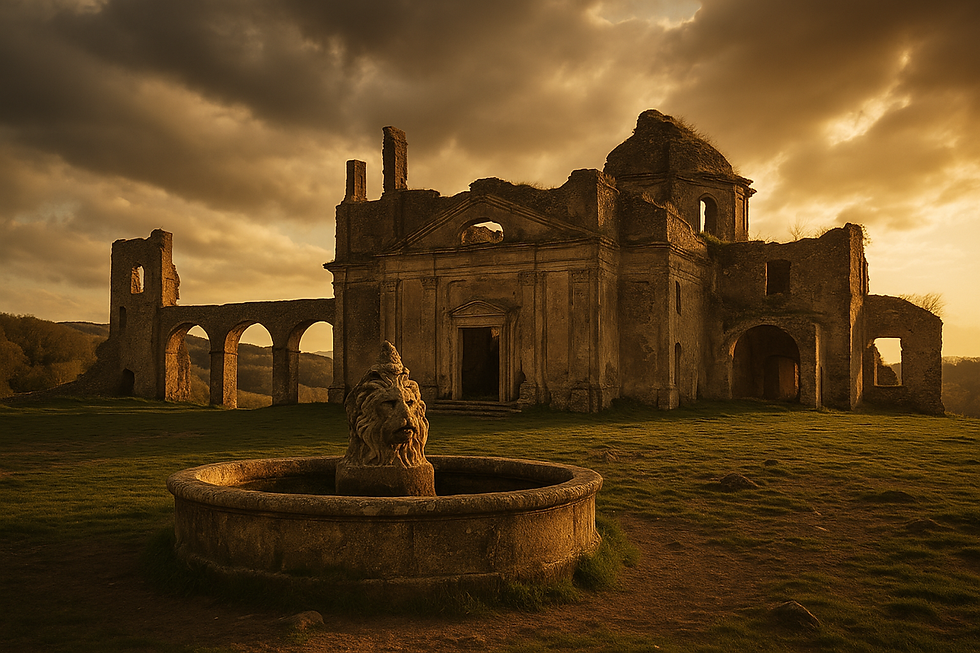
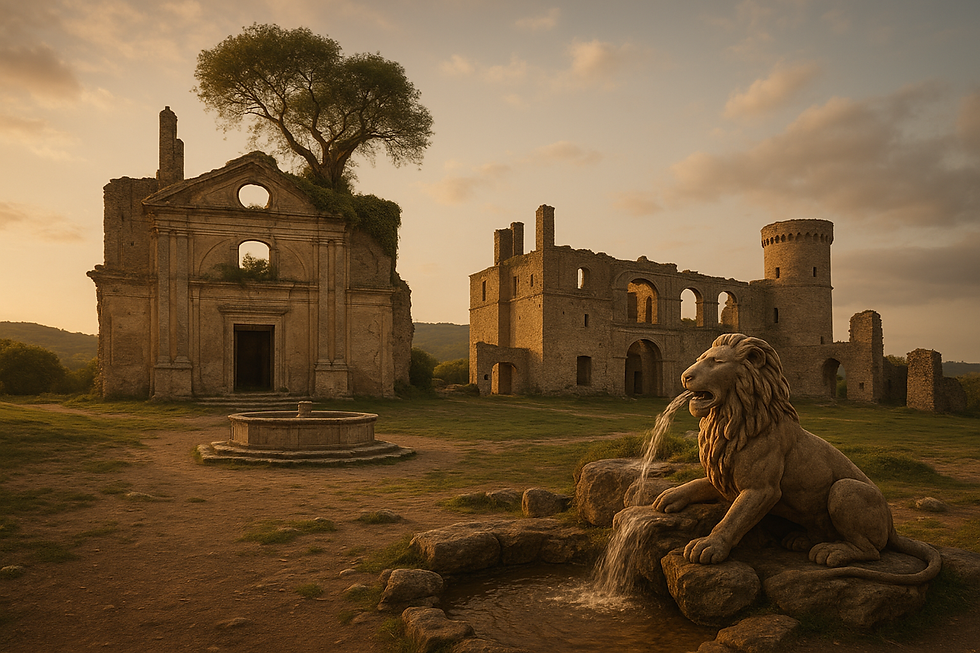
⛪ Seven Churches and Sacred Architecture
Built by the Franciscan friars between the 15th and 16th centuries.
Each faces a different village around the lake.
The church of SS. Giacomo e Cristoforo, with a dome by Vignola, is visible from the mainland.
The Rocchina by Antonio da Sangallo the Younger: a miniature Rocca Farnese.
Frescoes by followers of Benozzo Gozzoli.
🔮 The “Malta of the Popes” – Esoteric Mystery
An underground chamber carved into Mount Tabor.
Possibly Etruscan in origin; used as a prison for heretical clergy.
Described by Dante in Paradiso, Canto IX.
In modern esotericism, believed to be an entrance to the mythical kingdom of Agarthi.
🎬 Film and Literature
Filming location for:
La maschera by Fiorella Infascelli
Le meraviglie by Alice Rohrwacher
Stasera a casa di Alice by Carlo Verdone
And more…
Also featured in the novel La natura è innocente by Walter Siti.
🍃 Biodiversity
Over 230 species of spontaneous and naturalized plants catalogued.
🌙
Isola Martana
– The Island of the Tragic Queen
📖 History and Ownership
First mentioned in a document from 852 AD.
In 1254, Count Guittone of Bisenzio claimed the title of podestà.
After 1649, it returned to the Church.
In the 1960s, purchased by the SAGIAR company.
Today, privately owned by a Roman-Viterbo-based company.
👑 The Tragedy of Queen Amalasuntha
In 535 AD, Amalasuntha, Ostrogothic queen, was assassinated here.
Methods of death are debated: strangled, stabbed, drowned, or thrown from the cliffs.
Her ghost is said to haunt the island on full moon nights.
Local fishermen claim her cries are still heard during strong northern winds.
🛶 Legends and Submerged Paths
A submerged stone road may have once linked the island to the mainland.
The House of Tomao (via Amalasunta 106, Marta): believed to be the fisherman’s house who transported the queen.
🙏 Monastic Orders
Over the centuries, it hosted:
Benedictines
Augustinians
Paolotti
Minims of Saint Francis of Paola (1574–1690)
🗺️ Geography and Features
Crescent-shaped; the visible tip of a submerged volcanic crater.
North side: steep cliffs.
South side: gentler slopes, oaks and olive trees.
⚓ Shared Curiosities
🏰 The Duchy of Castro
Both islands belonged to the Duchy of Castro, destroyed by Pope Innocent X in 1649.
On the ruins of the capital city, a single column was raised: “Hic Castrum fuit” (“Here stood Castro”).
🚢 Historical Navigation
In 1884, the first steamship – named Santa Cristina – sailed the lake. Owned by Giovanni Garassino, former owner of Bisentina.
🔒 Current Status
Bisentina: now open to the public thanks to the Rovati family.
Martana: closed, visitable only with special permission.
Tour boats from Capodimonte and Bolsena can circle both islands.
✨ Conclusion
The islands of Lake Bolsena offer a rare blend of nature, mysticism, history, and legend. They are timeless sentinels in the lake’s calm waters, echoing the stories of Popes, queens, monks, and ancient civilizations.

Comments