
🏰 The Mystery of Pia de’ Tolomei and the Lost Castle: Between History, Legend, and Memory
- Giano di Vico

- Aug 13, 2025
- 3 min read
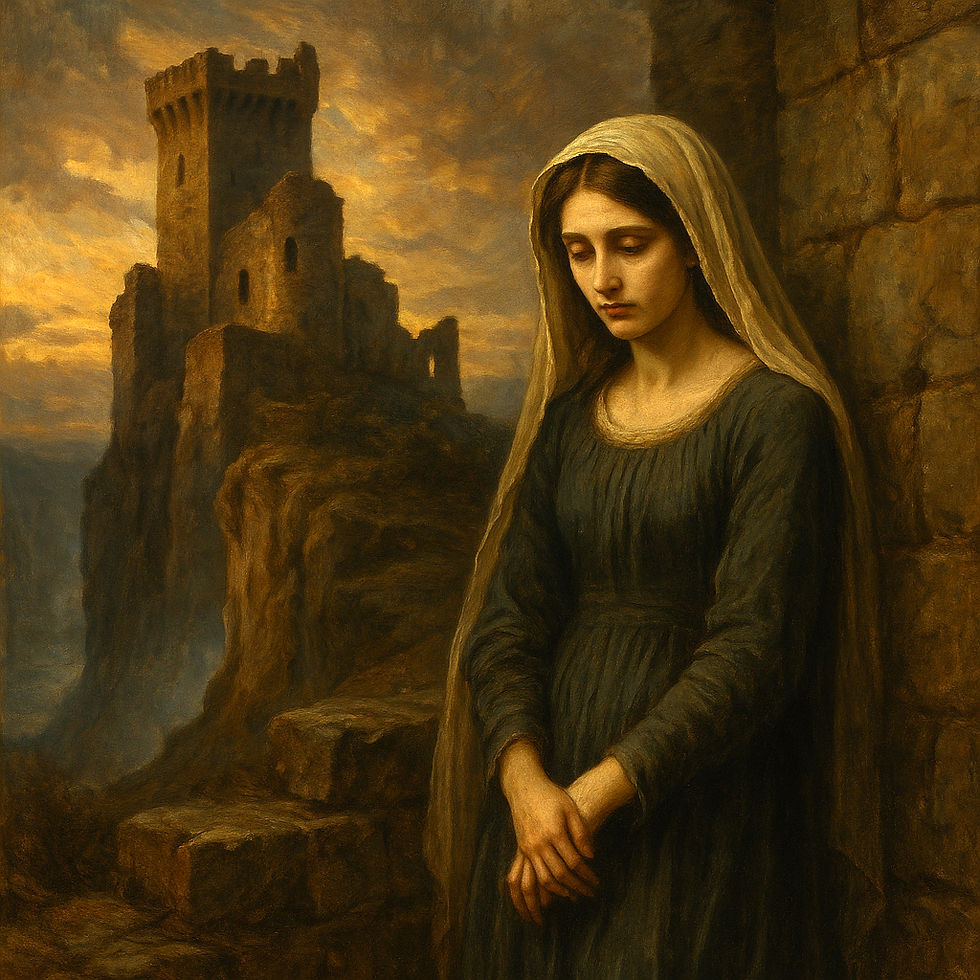
📖 A Story That Spans the Centuries
There is a verse by Dante that one never forgets:
“Remember me, I am Pia / Siena made me, Maremma unmade me.”
In barely six lines, in the Fifth Canto of the Purgatorio, Dante entrusts to eternity the figure of Pia de’ Tolomei: a mysterious woman, victim of a domestic crime, symbol of what today we would call femicide.
Her story intertwines with two places and two narratives: Castel di Pietra in Maremma and the Castle of Mezzano in the Tuscia.
🏯 Two Castles, One Legend
📍 The Castle of Mezzano: the Tuscia version
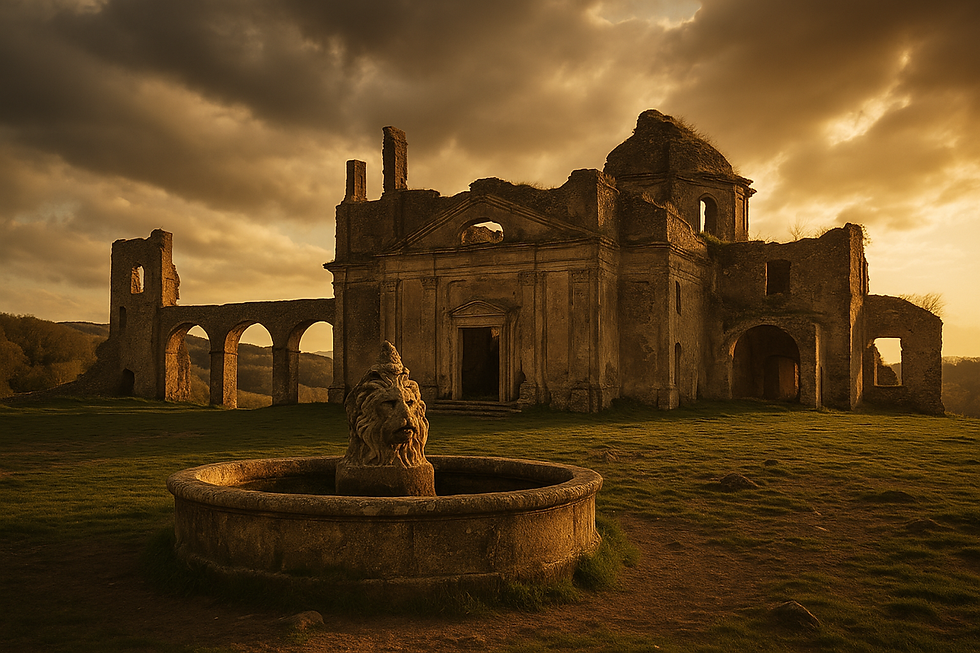
According to popular tradition in Viterbo, Pia was imprisoned and killed in the ruins of the Castle of Mezzano, in the woods of Monte Rosso overlooking the lake of the same name.
Built in the late Lombard period and destroyed in the 14th century, it controlled the route between the Tuscia and southern Tuscany.
Today, its ruins, surrounded by downy oaks and turkey oaks, form the natural stage for legends and tales.
🏰 Castel di Pietra: the historical site of the drama
Historical sources, however, point elsewhere: to Castel di Pietra, in the territory of Gavorrano in Maremma.
Here lived Nello dei Pannocchieschi, lord of the castle and a major political figure of the 13th century, several times podestà and captain in various Tuscan and Emilian cities.
👑 Nello dei Pannocchieschi: Power and Shadows
📜 Volterra, c. 1248 – Castel di Pietra, after 1322
Podestà of Volterra, Sassuolo, and Lucca
Captain of the People in Massa and Modena
Controlled the salt route and the mining routes for lead, silver, and iron
The castle dominated the valley of the Bruna River: a strategic position, and perhaps, the stage for tragedy.
🕵️ The Mystery of the Three Wives
Documents attest to three wives, but none named Pia:
A first, unidentified wife (perhaps the “Pia” of literature)
Margherita Aldobrandeschi of Sovana
Bartola della Tosa (mentioned in the 1322 will)
From Margherita came Binduccio, who died at age 13, drowned in a well by assassins of the Orsini: the “Well of the Innocent” in Massa Marittima.
🧩 Modern Theories
🪶 Pia Malavolti
According to some scholars, Pia was not a Tolomei but Pia Malavolti, wife of Tollo di Prata.
Nello would have been the guarantor of the marriage, but Tollo was assassinated in 1285 for political reasons, and the fate of his wife remained shrouded in silence.
The legend of Pia de’ Tolomei may have been born as a diversion, shifting attention from a political crime to a private drama.
🏗️ Castel di Pietra: Architecture and Ruins
🏰 11th century: first documented tower
🏯 12th century: expanded into a castle
👑 13th century: under Pannocchieschi control
🏛️ 1328: passes to the Municipality of Massa Marittima
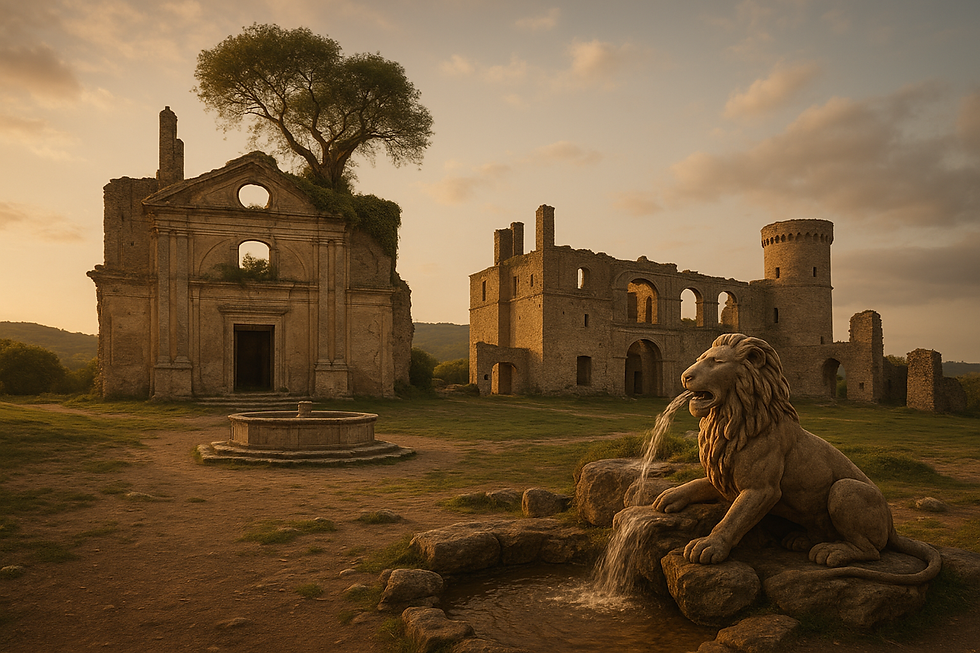
Today remain towers, palace ruins, and walls. One of these, the eastern tower, overlooks the cliff known as the “Countess’s Leap”—the place where, according to legend, Pia was thrown into the void.
🎭 The “Countess’s Leap”
Every first Saturday of August, in Gavorrano, the legend comes alive in a historical reenactment.
The public witnesses the condemnation and fall, among medieval costumes, torches, and the deep beat of drums.
🎨 Pia in Culture and Art
Literature: from Matteo Bandello to Carolina Invernizio, to Marguerite Yourcenar
Music: Donizetti’s opera (Pia de’ Tolomei, 1837) and Gianna Nannini’s concept album (Pia come la canto io, 2007)
Cinema: silent films and postwar productions
Art: the famous painting by Dante Gabriel Rossetti (1868), a Pre-Raphaelite icon of melancholy and beauty
🔍 Two Castles, One Truth
Whether the drama took place in Maremma or in the Tuscia, Pia’s story is a universal symbol:
of female fragility in the Middle Ages
of injustice masked as honor
of the power of literature to keep memory alive
❤️ A Memory That Does Not Fade
Dante’s Pia, with her “Remember me,” crosses eight centuries and still speaks today of gender violence, dignity, and memory.
And as the ruins of the two castles continue to watch over their landscapes, the legend echoes a warning: history must not be forgotten.

Comments